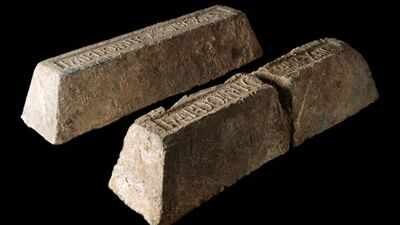
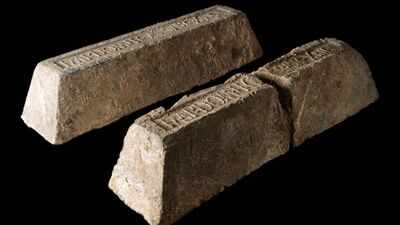
The discovery of two Roman lead blocks in Ceredigion has brought a nearly 2,000-year-old piece of Wales history back into view. Found by metal detectorists Nick Yallope and Peter Nicolas on grazing land at Llangynfelyn, the objects carry lettering linked to Emperor Domitian and date back to AD 87. The find is particularly important because the blocks are the first Roman lead ingots of their kind recorded in west Wales. Their discovery also provides evidence that the area’s lead resources were already being used by the Romans soon after their conquest of the region.
How the two metal detectorists discovered 2000-year-old Roman lead blocks in Wales
The two objects were found on farmland belonging to local farmer Geraint Jenkins, who had given Yallope and Nicolas permission to use metal detectors on the land. According to the National Museum Wales, the ingots were buried around half a metre below the surface and were less than 2 metres apart.The discovery was made in Llangynfelyn, in Ceredigion, where the surrounding landscape contains rich mineral and ore deposits. Their presence suggests that the Roman interest in the region was connected not only with controlling territory but also with making use of its natural resources.
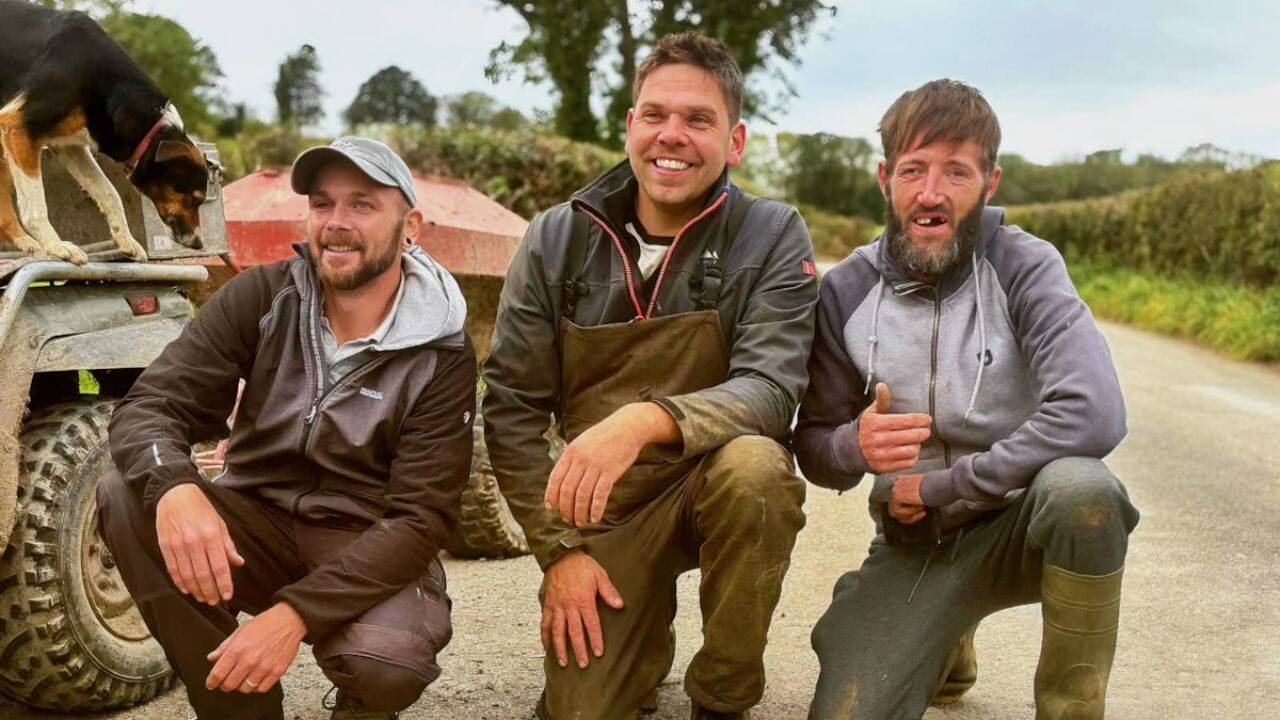
Metal detectorists Nick Yallope and Peter Nicolas with landowner (Centre) Geraint Jenkins. Image Credit: National Museum Wales
Inscriptions on these lead objects fixed the date to AD 87
The most revealing feature of the two blocks is the lettering impressed into their surfaces. TheHistoryBlog reports that the inscription reads IMP DOMIT CAE AUG XIII COS, referring to Emperor Domitian as consul for the 13th time.That detail provides a precise date. Domitian held his thirteenth consulship in AD 87, placing the production of the ingots 6 years after he became emperor in AD 81. The inscription therefore connects the objects to a particular point in Roman history.The reference to Domitian is also important because his reign fell during a period when Roman control in Britain was being strengthened. According to the National Museum Wales, these ingots show that lead from the area was being exploited little more than a decade after the final conquest of the region in the mid-AD 70s.
Importance of these lead ingots for Ceredigion
Roman lead ingots are unique archaeological finds, and their rarity gives the Ceredigion discovery added significance. The National Museum Wales reports that these are the first Roman lead pigs of their kind to be found in west Wales.TheHistoryBlog reports these objects as part of the wider Roman lead industry in Britain. It notes that about 100 such pigs are known from Roman Britain, with fewer than half still surviving. Their size and shape made them practical to handle, stack and transport, while the lead itself had many uses across the Roman world.For Ceredigion, the blocks provide a physical connection between the local landscape and the wider Roman economy. Museum curator Carrie Canham said the area’s mineral deposits were a major reason for Roman interest in the region, while lead mined there could travel across the Roman Empire.
What the discovery says about Roman activity after the conquest
The date of the ingots gives the discovery a wider historical meaning. The Romans had completed their conquest of Wales by around AD 78, according to TheHistoryBlog. The Ceredigion blocks were produced only about 9 years later.This short gap suggests that the region’s mineral resources were being brought into Roman activity quickly after the conquest. The inscriptions also indicate that the lead was connected with imperial administration during Domitian’s reign.Rather than being isolated pieces of metal, these objects show how a local resource could become part of an empire-wide system. Lead from Britain was valuable to the Romans, and Ceredigion appears to have played a role in supplying it.
Next step in preserving this Roman treasure
The discovery has now been formally declared treasure. TheHistoryBlog reports that a valuation committee will assess the market value of the ingots before a local museum is given the opportunity to acquire them. Ceredigion Museum in Aberystwyth has expressed interest in adding them to its collection.The museum is planning a new archaeology gallery for 2027, where the story of the ingots could be shared with visitors. That would allow the objects to remain connected to the area where they were found while giving the public a chance to see evidence of Ceredigion’s Roman industrial past.
