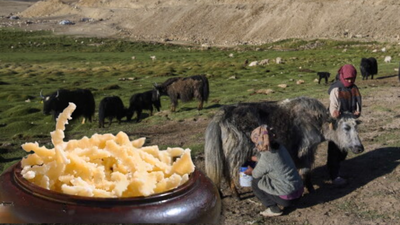
A traditional cheese made from yak milk in the high-altitude villages of Ladakh has found international recognition. Yak Churpi, made for generations by pastoral communities, won a gold medal at the Mundial do Queijo do Brasil 2026 in São Paulo, Brazil. The award brought attention to a cheese that is still difficult to find outside Ladakh. The gold-winning sample was made by Thenlay Nurboo. According to the official website of the Prime Minister’s Office, Yak Churpi-Soft from Nordic Farm, Leh, Ladakh was among the Indian products that won gold at the international cheese competition.
What is Churpi?
Churpi, also called Churpe or Chura in parts of the region, is a traditional cheese made from milk. In Ladakh, the most valued version is made from yak milk. It has been part of the food habits of nomadic communities for generations. It is not a cheese that was recently developed for the international market. Nurboo has repeatedly said that his family and other households in Ladakh have been making it for years. Unlike many familiar cheeses, Ladakhi Churpi is commonly used as a cooking ingredient. It can be added to soups, curries and watery noodle preparations, including local dishes eaten during the cold months. The cheese has a light bitter and slightly sour taste and can range from soft to hard depending on how it is prepared and dried.
How is Ladakh’s yak Churpi made?
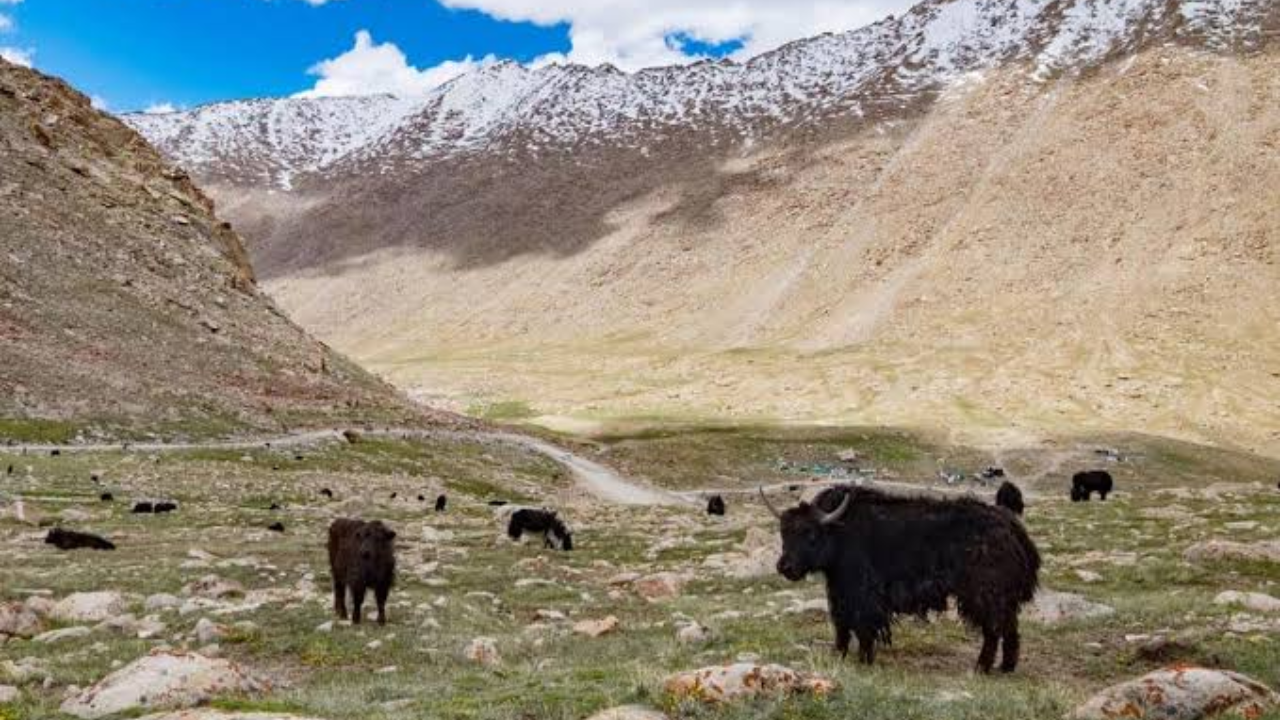
Unlike many familiar cheeses, Ladakhi Churpi is commonly used as a cooking ingredient.
The process begins with fresh yak milk. At Nomadic Farm, the milk is first allowed to set into curd. The curd is then churned. This separates the butter from the buttermilk or lassi. The liquid left after churning is boiled. As it heats, the curds separate from the whey, producing a cheese similar in appearance to ricotta at this stage. The curds are collected in a cotton cloth and hung for several hours so that excess liquid drains out. They are then kneaded, massaged and shaped by hand. The cheese is finally pressed into cakes. Traditional designs can also be carved into the surface by hand. The cakes are then dried for around two to three days in the gentle Himalayan sunlight.
What does yak Churpi taste like?
Ladakhi Churpi is different from soft processed cheese or the varieties commonly sold in supermarkets. The traditional cheese has a distinctive, slightly bitter and mildly sour taste. The harder version becomes dense and chewy after drying. It is generally not eaten like a slice of sandwich cheese. Instead, small pieces can be added to soups, noodles and curries. It can also be eaten with other traditional foods. Nurboo makes different forms of Churpi, including soft and hard varieties, while another version is made as a sweet snack.
How much does Churpi cost?
The price depends on the type and where it is purchased. As reported by Rediff, Nurboo’s Churpi was priced locally at around Rs 1,100 to Rs 1,200 per kg. Traditionally, the cheese was sold in small quantities in local markets. After the fame, it is at around Rs 1,600 to Rs 2,000 per kg. While, small moon-shaped sweet Churpi is priced at about Rs 20 per piece. This means the price has changed as demand for the product has increased.
Why is yak milk important?
Nurboo’s family has a herd of around 100 yaks, while other villagers also rear animals in the area. Yak milk is available only in limited quantities. At his farm, a female yak may provide around 1.5 litres of milk a day during the productive season, according to the source material. The entire herd can produce around 60-70 litres of milk a day, from which roughly 15-20 kg of Churpi can be made.
From Ladakh to Brazil
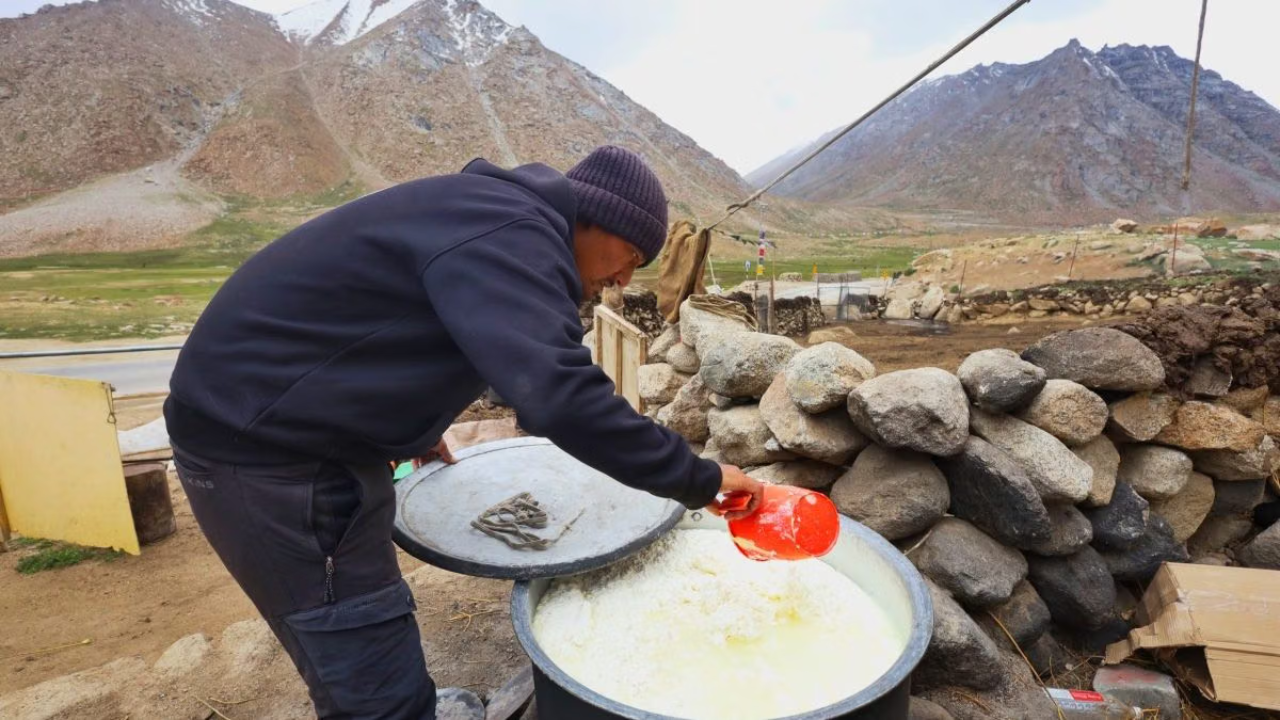
The gold-winning sample was made by Thenlay Nurboo, a Ladakh local.
Nurboo did not originally set out to make a cheese for an international competition. After training at SECMOL, the alternative education centre founded by Sonam Wangchuk, he returned to work with his family. He experimented with products such as mozzarella and other European-style cheeses, but Ladakh’s extremely dry and cold conditions made the process difficult. He eventually decided to focus on the cheese his community already knew. A four-kilogram sample of his soft yak Churpi was eventually sent to São Paulo for the Mundial do Queijo do Brasil 2026.Nurboo could not attend the event because he did not receive the required yellow-fever vaccination in time. The award was announced later, and his achievement received wider attention after Prime Minister Narendra Modi congratulated the Indian cheesemakers.
