Author: Biswajit Das

  • Sarva Shiksha Abhiyan Bharti 2024 Apply: सर्व शिक्षा अभियान में भर्ती के लिए ऑनलाइन फॉर्म भरें, जल्द करें अप्लाई

    Sarva Shiksha Abhiyan Bharti 2024 Apply: सर्व शिक्षा अभियान में भर्ती के लिए ऑनलाइन फॉर्म भरें, जल्द करें अप्लाई

    Sarva Shiksha Abhiyan Bharti 2024 Apply: सर्व शिक्षा अभियान (SSA) भारत सरकार का एक महत्वपूर्ण कार्यक्रम है जो देश में प्राथमिक शिक्षा के सार्वभौमीकरण पर केंद्रित है। इस कार्यक्रम के तहत, सरकार ने 2024 में एक बड़े पैमाने पर भर्ती अभियान की घोषणा की है। यह भर्ती अभियान शिक्षा के क्षेत्र में नौकरी की तलाश कर रहे उम्मीदवारों के लिए एक सुनहरा अवसर है।

    इस भर्ती अभियान के माध्यम से, सरकार का लक्ष्य प्राथमिक शिक्षकों, लैब तकनीशियनों, कंप्यूटर शिक्षकों, चपरासियों और कार्यालय कर्मचारियों सहित विभिन्न पदों के लिए लगभग 2.5 लाख रिक्तियों को भरना है। यह न केवल बड़ी संख्या में रोजगार के अवसर प्रदान करेगा, बल्कि देश भर में शिक्षा की गुणवत्ता में सुधार लाने में भी मदद करेगा।

    सर्व शिक्षा अभियान भर्ती 2024 का अवलोकन

    विवरणजानकारीभर्ती संगठनशिक्षा मंत्रालय, भारत सरकारकार्यक्रम का नामसर्व शिक्षा अभियान (SSA)कुल रिक्तियांलगभग 2,50,000पदप्राथमिक शिक्षक, लैब तकनीशियन, कंप्यूटर शिक्षक, चपरासी, कार्यालय कर्मचारीआवेदन प्रक्रियाऑनलाइनआवेदन शुरू होने की तिथिजुलाई 2024 (संभावित)आवेदन की अंतिम तिथिअगस्त 2024 (संभावित)आधिकारिक वेबसाइटssa.nic.in

    Also Read

    Anganwadi Bharti 2024: फटाफट करें ऑनलाइन आवेदन, सरकारी नौकरी पाने का सुनहरा मौका

    सर्व शिक्षा अभियान क्या है?

    सर्व शिक्षा अभियान (SSA) भारत सरकार का एक प्रमुख कार्यक्रम है जिसका उद्देश्य देश में प्राथमिक शिक्षा का सार्वभौमीकरण करना है। इस कार्यक्रम की शुरुआत वर्ष 2000-2001 में की गई थी। SSA का मुख्य लक्ष्य 6 से 14 वर्ष की आयु के सभी बच्चों को गुणवत्तापूर्ण प्राथमिक शिक्षा प्रदान करना है।

    SSA के प्रमुख उद्देश्य:

    • सभी बच्चों को नि:शुल्क और अनिवार्य शिक्षा प्रदान करना
    • शिक्षा में लैंगिक और सामाजिक असमानताओं को दूर करना
    • शिक्षा की गुणवत्ता में सुधार लाना
    • स्कूल में नामांकन, उपस्थिति और प्रतिधारण दर में वृद्धि करना
    • शिक्षा में समुदाय की भागीदारी को बढ़ावा देना

    सर्व शिक्षा अभियान भर्ती 2024: रिक्त पदों का विवरण

    SSA भर्ती 2024 के तहत विभिन्न पदों के लिए रिक्तियां निम्नलिखित हैं:

    1. प्राथमिक शिक्षक: लगभग 1,50,000 पद
    2. लैब तकनीशियन: लगभग 30,000 पद
    3. कंप्यूटर शिक्षक: लगभग 40,000 पद
    4. चपरासी: लगभग 20,000 पद
    5. कार्यालय कर्मचारी: लगभग 10,000 पद

    पात्रता मानदंड

    शैक्षिक योग्यता:

    • प्राथमिक शिक्षक: 12वीं पास + D.El.Ed. या B.El.Ed.
    • लैब तकनीशियन: विज्ञान में स्नातक + डिप्लोमा इन लैब टेक्नोलॉजी
    • कंप्यूटर शिक्षक: BCA या B.Sc. (कंप्यूटर साइंस)
    • चपरासी: 10वीं पास
    • कार्यालय कर्मचारी: स्नातक + कंप्यूटर ज्ञान

    आयु सीमा:

    • न्यूनतम आयु: 18 वर्ष
    • अधिकतम आयु: 40 वर्ष (आरक्षित श्रेणियों के लिए छूट लागू)

    आवेदन प्रक्रिया

    SSA भर्ती 2024 के लिए आवेदन प्रक्रिया पूरी तरह से ऑनलाइन होगी। उम्मीदवार निम्नलिखित चरणों का पालन करके आवेदन कर सकते हैं:

    1. SSA की आधिकारिक वेबसाइट ssa.nic.in पर जाएं
    2. होमपेज पर “SSA Recruitment 2024” लिंक पर क्लिक करें
    3. नया पंजीकरण करें या लॉगिन करें
    4. आवेदन फॉर्म को ध्यानपूर्वक भरें
    5. आवश्यक दस्तावेज अपलोड करें
    6. आवेदन शुल्क का भुगतान करें
    7. फॉर्म जमा करें और प्रिंटआउट लें

    Also Read

    बड़ी खबर! इंडिया पोस्ट ग्रामीण डाक सेवक 2024 की नई मेरिट लिस्ट जारी, कम नंबर वालों का भी हुआ सिलेक्शन India Post GDS Result 2024

    आवेदन शुल्क

    श्रेणीशुल्कसामान्य/OBC/EWS₹500SC/ST/PWD₹250महिला उम्मीदवार₹250

    चयन प्रक्रिया

    SSA भर्ती 2024 के लिए चयन प्रक्रिया निम्नलिखित चरणों से होकर गुजरेगी:

    1. लिखित परीक्षा: सामान्य ज्ञान, तर्क शक्ति, गणित और संबंधित विषय
    2. कौशल परीक्षण: कंप्यूटर शिक्षक और लैब तकनीशियन के लिए
    3. शारीरिक दक्षता परीक्षण: चपरासी पद के लिए
    4. दस्तावेज सत्यापन: सभी पदों के लिए
    5. साक्षात्कार: कुछ पदों के लिए (यदि आवश्यक हो)

    वेतनमान

    SSA भर्ती 2024 के तहत विभिन्न पदों के लिए वेतनमान निम्नलिखित है:

    • प्राथमिक शिक्षक: ₹35,400 – ₹1,12,400
    • लैब तकनीशियन: ₹29,200 – ₹92,300
    • कंप्यूटर शिक्षक: ₹35,400 – ₹1,12,400
    • चपरासी: ₹18,000 – ₹56,900
    • कार्यालय कर्मचारी: ₹25,500 – ₹81,100

    महत्वपूर्ण तिथियां

    घटनातिथिअधिसूचना जारी होने की तिथि1 जुलाई 2024 (संभावित)ऑनलाइन आवेदन शुरू होने की तिथि10 जुलाई 2024 (संभावित)ऑनलाइन आवेदन की अंतिम तिथि10 अगस्त 2024 (संभावित)प्रवेश पत्र जारी होने की तिथिसितंबर 2024 (संभावित)लिखित परीक्षा की तिथिअक्टूबर 2024 (संभावित)परिणाम घोषणादिसंबर 2024 (संभावित)

    आवश्यक दस्तावेज

    SSA भर्ती 2024 के लिए आवेदन करते समय निम्नलिखित दस्तावेजों की आवश्यकता होगी:

    • पासपोर्ट साइज फोटो
    • हस्ताक्षर
    • जन्म तिथि प्रमाण पत्र
    • शैक्षिक योग्यता प्रमाण पत्र
    • जाति प्रमाण पत्र (यदि लागू हो)
    • पहचान प्रमाण (आधार कार्ड/पैन कार्ड/वोटर आईडी)
    • अनुभव प्रमाण पत्र (यदि लागू हो)

    तैयारी रणनीति

    SSA भर्ती 2024 की परीक्षा के लिए तैयारी करने के लिए कुछ महत्वपूर्ण टिप्स:

    1. पाठ्यक्रम का अध्ययन करें: परीक्षा के पाठ्यक्रम को ध्यानपूर्वक पढ़ें और समझें
    2. नियमित अभ्यास करें: रोजाना कम से कम 2-3 घंटे अध्ययन करें
    3. मॉक टेस्ट दें: ऑनलाइन मॉक टेस्ट देकर अपनी तैयारी का मूल्यांकन करें
    4. समय प्रबंधन: परीक्षा में समय प्रबंधन महत्वपूर्ण है, इसलिए इसका अभ्यास करें
    5. करंट अफेयर्स पर ध्यान दें: नियमित रूप से समाचार पत्र पढ़ें और करंट अफेयर्स पर ध्यान दें
    6. गुणवत्तापूर्ण सामग्री का उपयोग करें: अच्छी किताबें और ऑनलाइन संसाधनों का उपयोग करें

    लाभ और अवसर

    SSA भर्ती 2024 में चयनित होने पर उम्मीदवारों को निम्नलिखित लाभ और अवसर मिलेंगे:

    • स्थायी नौकरी: सरकारी नौकरी की सुरक्षा और स्थिरता
    • आकर्षक वेतन: नियमित वेतन वृद्धि के साथ अच्छा वेतनमान
    • भत्ते: महंगाई भत्ता, मकान किराया भत्ता, यात्रा भत्ता आदि
    • पेंशन लाभ: सेवानिवृत्ति के बाद पेंशन की सुविधा
    • चिकित्सा सुविधाएं: स्वयं और परिवार के लिए स्वास्थ्य बीमा
    • अवकाश: नियमित अवकाश और अन्य छुट्टियां
    • करियर विकास: पदोन्नति और कौशल विकास के अवसर

    अस्वीकरण (Disclaimer)

    यह लेख सर्व शिक्षा अभियान भर्ती 2024 के बारे में जानकारी प्रदान करने के उद्देश्य से लिखा गया है। हालांकि, यह ध्यान रखना महत्वपूर्ण है कि भर्ती प्रक्रिया, तिथियां, और अन्य विवरण परिवर्तन के अधीन हैं। इसलिए, उम्मीदवारों को सलाह दी जाती है कि वे नवीनतम और सटीक जानकारी के लिए SSA की आधिकारिक वेबसाइट पर जाएं और सरकारी अधिसूचनाओं का पालन करें। इस लेख में दी गई जानकारी केवल सामान्य मार्गदर्शन के लिए है और इसे कानूनी या व्यावसायिक सलाह के रूप में नहीं लिया जाना चाहिए।

    वर्तमान में, SSA भर्ती 2024 की आधिकारिक घोषणा नहीं की गई है। यह लेख संभावित भर्ती प्रक्रिया और पिछले वर्षों के पैटर्न पर आधारित है। इसलिए, उम्मीदवारों को सलाह दी जाती है कि वे आधिकारिक अधिसूचना जारी होने का इंतजार करें और उसके बाद ही कोई कार्रवाई करें।
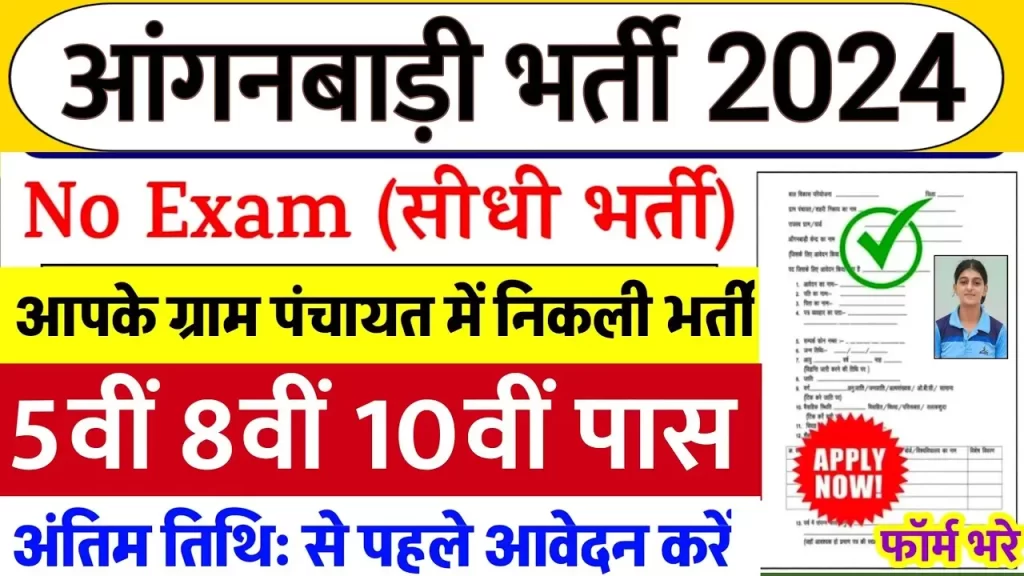

  • Anganwadi Bharti 2024: फटाफट करें ऑनलाइन आवेदन, सरकारी नौकरी पाने का सुनहरा मौका

    Anganwadi Bharti 2024: फटाफट करें ऑनलाइन आवेदन, सरकारी नौकरी पाने का सुनहरा मौका

    Anganwadi Bharti 2024: आंगनबाड़ी भर्ती 2024 के लिए आवेदन प्रक्रिया शुरू हो गई है। महिला एवं बाल विकास मंत्रालय ने देशभर में आंगनबाड़ी कार्यकर्ता, सहायिका और पर्यवेक्षक के पदों पर बड़े पैमाने पर भर्तियां निकाली हैं। इस भर्ती के माध्यम से महिलाओं को रोजगार के अवसर मिलेंगे और वे समाज के विकास में अपना योगदान दे सकेंगी।

    आंगनबाड़ी भर्ती 2024 में कुल 51,400 से अधिक पदों पर भर्तियां की जाएंगी। इसमें आंगनबाड़ी कार्यकर्ता, सहायिका, शिक्षक और पर्यवेक्षक के पद शामिल हैं। आवेदन प्रक्रिया अगस्त 2024 से शुरू हो चुकी है और दिसंबर 2024 तक चलेगी। इच्छुक उम्मीदवार अपने राज्य की आधिकारिक वेबसाइट पर जाकर ऑनलाइन आवेदन कर सकते हैं।

    आंगनबाड़ी भर्ती 2024 की मुख्य जानकारी

    विवरणजानकारीकुल पद51,400+पद के नामकार्यकर्ता, सहायिका, शिक्षक, पर्यवेक्षकआवेदन शुरूअगस्त 2024आवेदन अंतिम तिथिदिसंबर 2024आयु सीमा18-45 वर्षशैक्षणिक योग्यता8वीं/10वीं/12वीं पास (पद के अनुसार)चयन प्रक्रियामेरिट आधारितवेतन₹5,000 – ₹15,000 प्रति माह

    Also Read

    Sarva Shiksha Abhiyan Bharti 2024: अभी ऑनलाइन फॉर्म भरें और पाएं सरकारी नौकरी का मौका

    आंगनबाड़ी भर्ती 2024 के लिए योग्यता

    आंगनबाड़ी भर्ती 2024 में आवेदन करने के लिए निम्न योग्यता होनी चाहिए:

    • आयु सीमा: 18-45 वर्ष (अधिकतम आयु में छूट उपलब्ध)
    • शैक्षणिक योग्यता:
      • सहायिका के लिए 8वीं पास
      • कार्यकर्ता के लिए 10वीं पास
      • शिक्षक के लिए 12वीं पास
      • पर्यवेक्षक के लिए स्नातक डिग्री
    • स्थानीय निवासी होना जरूरी
    • महिला उम्मीदवार ही आवेदन कर सकती हैं

    आंगनबाड़ी भर्ती 2024 के लिए आवश्यक दस्तावेज

    आवेदन करते समय निम्न दस्तावेज तैयार रखें:

    • 10वीं/12वीं की मार्कशीट
    • आधार कार्ड
    • जन्म प्रमाण पत्र
    • निवास प्रमाण पत्र
    • जाति प्रमाण पत्र (यदि लागू हो)
    • पासपोर्ट साइज फोटो
    • हस्ताक्षर

    आंगनबाड़ी भर्ती 2024 के लिए ऑनलाइन आवेदन प्रक्रिया

    आंगनबाड़ी भर्ती 2024 के लिए ऑनलाइन आवेदन करने के लिए निम्न चरणों का पालन करें:

    1. अपने राज्य की आधिकारिक वेबसाइट पर जाएं
    2. “आंगनबाड़ी भर्ती 2024” के लिंक पर क्लिक करें
    3. नया रजिस्ट्रेशन करें और लॉगिन करें
    4. आवेदन फॉर्म भरें और सभी जानकारी सही-सही दर्ज करें
    5. आवश्यक दस्तावेज अपलोड करें
    6. आवेदन शुल्क का भुगतान करें (यदि लागू हो)
    7. फॉर्म जमा करें और प्रिंटआउट लें

    आंगनबाड़ी भर्ती 2024 का वेतन

    आंगनबाड़ी कर्मचारियों को निम्न वेतन दिया जाएगा:

    • सहायिका: ₹5,000 – ₹7,000 प्रति माह
    • कार्यकर्ता: ₹8,000 – ₹10,000 प्रति माह
    • शिक्षक: ₹10,000 – ₹12,000 प्रति माह
    • पर्यवेक्षक: ₹12,000 – ₹15,000 प्रति माह

    आंगनबाड़ी भर्ती 2024 की चयन प्रक्रिया

    आंगनबाड़ी भर्ती 2024 में उम्मीदवारों का चयन निम्न प्रक्रिया के आधार पर किया जाएगा:

    1. शैक्षणिक योग्यता के आधार पर मेरिट लिस्ट
    2. दस्तावेज सत्यापन
    3. शारीरिक स्वस्थता जांच
    4. साक्षात्कार (कुछ पदों के लिए)

    Also Read

    GDS 3rd Merit List 2024 जारी: 90% उम्मीदवारों के लिए बड़ा मौका, तुरंत देखें अपना नाम

    आंगनबाड़ी भर्ती 2024 की महत्वपूर्ण तिथियां

    • आवेदन शुरू: अगस्त 2024
    • आवेदन अंतिम तिथि: दिसंबर 2024
    • दस्तावेज सत्यापन: जनवरी-फरवरी 2025
    • परिणाम घोषणा: मार्च-अप्रैल 2025

    आंगनबाड़ी भर्ती 2024 के लाभ

    आंगनबाड़ी भर्ती 2024 से निम्न लाभ होंगे:

    • महिलाओं को रोजगार के अवसर मिलेंगे
    • ग्रामीण क्षेत्रों में बच्चों और महिलाओं का विकास होगा
    • पोषण और स्वास्थ्य सेवाओं में सुधार होगा
    • समाज के विकास में महिलाओं की भागीदारी बढ़ेगी

    आंगनबाड़ी भर्ती 2024 के लिए तैयारी कैसे करें

    आंगनबाड़ी भर्ती 2024 की तैयारी के लिए निम्न टिप्स अपनाएं:

    • बाल विकास और पोषण से संबंधित जानकारी पढ़ें
    • सरकारी योजनाओं की जानकारी रखें
    • सामान्य ज्ञान और करंट अफेयर्स पढ़ें
    • हिंदी और अंग्रेजी भाषा पर अच्छी पकड़ बनाएं
    • इंटरव्यू की तैयारी करें

    आंगनबाड़ी भर्ती 2024 से संबंधित महत्वपूर्ण बातें

    • आवेदन करने से पहले पूरी अधिसूचना ध्यान से पढ़ें
    • सभी जानकारी सही-सही भरें और दस्तावेज सावधानी से अपलोड करें
    • आवेदन की अंतिम तिथि का ध्यान रखें और समय पर आवेदन करें
    • चयन प्रक्रिया के हर चरण की तैयारी करें
    • किसी भी अपडेट के लिए आधिकारिक वेबसाइट चेक करते रहें

    निष्कर्ष

    आंगनबाड़ी भर्ती 2024 महिलाओं के लिए रोजगार का एक बेहतरीन अवसर है। इससे न केवल महिलाओं को आर्थिक मदद मिलेगी बल्कि वे समाज के विकास में भी अपना योगदान दे सकेंगी। इच्छुक उम्मीदवार जल्द से जल्द आवेदन करें और अच्छी तैयारी के साथ चयन प्रक्रिया में भाग लें। आशा है कि यह भर्ती अधिक से अधिक महिलाओं को रोजगार और सशक्तिकरण का अवसर प्रदान करेगी।

    Disclaimer: यह जानकारी सरकारी वेबसाइट और विभिन्न स्रोतों से एकत्रित की गई है। हालांकि इसकी पुष्टि के लिए आधिकारिक अधिसूचना और वेबसाइट को ही अंतिम स्रोत माना जाना चाहिए। किसी भी विसंगति के लिए हम जिम्मेदार नहीं हैं। कृपया आवेदन करने से पहले सभी नियम और शर्तें ध्यान से पढ़ें।

  • Australia Unveils $2,400 Energy Rebate to Tackle Rising Cost-of-Living

    Australia Unveils $2,400 Energy Rebate to Tackle Rising Cost-of-Living

    In response to the ongoing rise in energy prices and the pressure it’s placing on households across the country, the Australian government has announced a substantial $2,400 energy rebate. This initiative aims to ease the burden of high electricity and gas bills, providing relief to millions of Australian families who are struggling to keep up with the soaring cost-of-living. The rebate will go a long way in helping individuals and households better manage their energy expenses in these financially challenging times.

    What Is the $2,400 Energy Rebate?

    The $2,400 energy rebate is part of a broader government strategy to tackle inflation and the rising cost-of-living, which have significantly impacted Australians in recent months. This rebate will be directly applied to eligible households’ energy bills, helping them save on their electricity and gas payments.

    Eligible households will receive a direct reduction in their energy costs, up to $2,400, depending on the size of the household and its energy consumption. This is a welcome measure for families who have been forced to cut back on essential services, including heating, cooling, and cooking, as energy costs continue to rise.

    The rebate is designed to reduce the financial pressure on low- to middle-income households, ensuring they can continue to meet their energy needs without falling behind on payments.

    Who Is Eligible for the $2,400 Energy Rebate?

    The rebate will be available to a wide range of Australian households, with eligibility based on income and energy usage. Key groups that are expected to benefit from this energy relief include:

    Low- and Middle-Income Households

    Australian families earning a low-to-middle income will be the primary beneficiaries of the rebate. For families who may not have been able to absorb rising energy costs due to other financial commitments, this rebate is a lifeline, ensuring they don’t have to sacrifice essential services in order to pay their bills.

    Pensioners and Seniors

    Older Australians, especially those living on fixed incomes such as the Age Pension, will also be a primary target for this rebate. Many seniors have been hit particularly hard by rising living costs, and this financial assistance aims to help them stay comfortable during extreme weather conditions, such as hot summers or cold winters, without worrying about excessive energy bills.

    Families with Young Children

    Families with children, especially those living in larger homes, can also benefit from this rebate. The rebate aims to assist these households in managing higher energy demands, such as running heating and cooling systems and other household appliances.

    People with Disabilities

    Australians with disabilities who often require additional energy for medical equipment or special needs will also be eligible for this rebate. This group tends to face higher utility bills due to their specific requirements, making the rebate an essential tool for helping them manage costs.

    Renters

    While the rebate primarily targets homeowners, renters who pay for their own utilities and face rising energy costs will also benefit from the relief. The government has ensured that tenants in both private and public housing will be eligible, provided they meet the required criteria.

    How to Apply for the $2,400 Energy Rebate

    The application process for the $2,400 energy rebate is designed to be as simple and straightforward as possible. Households will not need to go through a complicated process to apply, and for many eligible citizens, the rebate may be applied automatically. Here’s what to expect:

    Automatic Application for Eligible Households

    For many Australian households that already receive government assistance, such as pensions or family tax benefits, the energy rebate will be applied automatically. If you are already receiving certain welfare payments or benefits, your rebate will be credited directly to your energy account without you needing to submit an application.

    Online Application

    If you are not automatically eligible or if you need to submit a formal application, the process will typically be available online. Australians will be able to visit the official government website, create an account, and provide any necessary documentation to confirm eligibility. This could include income details, proof of residency, or current utility bills.

    Local Support Services

    In some cases, those who may not have access to the internet or prefer in-person assistance will be able to apply at local government offices or community service centers. These centers will provide support and guidance on how to complete the application process and verify eligibility.

    Energy Providers

    For some households, the rebate may also be processed directly through their energy provider. This means that once your eligibility is confirmed, the energy company may automatically apply the discount to your next bill.

    When Will the $2,400 Energy Rebate Be Available?

    The government has outlined a clear timeline for when the rebate will be available to eligible households. The first rebates are expected to be applied in early 2025, with further applications and distributions taking place over the course of the year.

    Households should expect to receive communication from their energy providers or the government with updates about when they can expect their rebate, and any necessary steps to take if the rebate is not applied automatically.

    What Impact Will the Rebate Have on the Cost-of-Living?

    The $2,400 energy rebate is expected to have a significant impact on reducing the financial strain of the cost-of-living crisis for many Australians. With energy bills being one of the biggest household expenses, this rebate will help offset the rising costs, ensuring that families and individuals are better equipped to handle the ongoing challenges posed by inflation.

    This rebate will not only assist families in managing their energy costs, but it will also help stabilize the broader economy by reducing the overall burden on households. By offering direct financial relief, the government hopes to ease the cost-of-living pressures, allowing families to focus on other essential expenses such as groceries, healthcare, and education.

    Will the Rebate Be Extended?

    While the initial rebate will cover a set amount for the year, there is a possibility that the government may extend or increase the rebate depending on how the energy market and cost-of-living issues evolve throughout the year. The rebate is part of a broader set of policies aimed at improving financial stability for Australians, and the government has indicated that they are committed to continuing support if necessary.

    Final Thoughts

    The $2,400 energy rebate is a crucial step in helping Australian households manage the rising costs of living. With energy prices expected to remain high in the foreseeable future, this rebate provides immediate relief to millions of Australians in need. Whether you are a pensioner, a family with young children, or a low- to middle-income household, this rebate will help reduce the financial burden of paying energy bills.

    As the rebate process unfolds, eligible Australians should keep an eye on updates from their energy providers and the government to ensure they don’t miss out on this valuable assistance.

  • 8 Rare European Coins Worth a Fortune, Check Your Pocket for These Hidden Gems

    8 Rare European Coins Worth a Fortune, Check Your Pocket for These Hidden Gems

    Coins have long been a fascinating part of history, and some of them are more than just currency they are valuable collectibles that could make you a small fortune. Europe, with its rich history and diverse currencies, is home to a number of rare coins that are highly sought after by collectors. You may be surprised to learn that some of these coins could be hiding in your own pocket, waiting to be discovered. Here are eight rare European coins worth a fortune that might just be worth checking for.

    1. The 1913 Swiss 20 Francs Gold Coin

    The Swiss 20 Francs gold coin is a piece of history that is highly valued among collectors. While many of these coins were minted during the 19th and 20th centuries, the 1913 edition is particularly rare. This coin, made of 90% gold, features a distinctive design of Helvetia, the female personification of Switzerland, and is admired for its intricate details. With fewer than 10 known to exist in private collections, the 1913 Swiss 20 Francs gold coin can fetch up to $5,000 at auction.

    2. The 2002 Rare European Euro Coin

    While the euro has been in circulation across many European countries since the early 2000s, certain coins minted in 2002 are considered rare. These coins, especially the €2 coins from the tiny European country of San Marino, feature unique engravings and are in high demand among collectors. Only a limited number of these coins were produced, and as a result, they can be sold for hundreds or even thousands of dollars in perfect condition.

    3. The 1933 German 5 Reichsmark Coin

    The 1933 German 5 Reichsmark coin is a fascinating piece of history, reflecting the political and economic climate of Nazi-era Germany. Though many were minted, the coin’s rarity and its connection to World War II make it incredibly valuable today. The coin’s design features the Reichsadler (Imperial Eagle), a symbol of the era. In excellent condition, this coin can be worth anywhere from $1,000 to $3,000, depending on its preservation and rarity.

    4. The 1914 British £1 Sovereign

    The British £1 Sovereign is one of the most iconic coins in Europe, and the 1914 edition is especially rare. This coin, featuring the famous design of Saint George slaying a dragon, is made from gold and is a symbol of British currency. Due to its age and rarity, the 1914 British Sovereign is highly prized by collectors, with its value reaching upwards of $600 to $800 or more, depending on its condition and historical significance.

    5. The 2007 Italian 1 Euro Coin – Vatican City Edition

    In 2007, a special edition of the 1 Euro coin was minted in Vatican City to commemorate the 80th anniversary of the Lateran Treaty. This coin is particularly rare because it was issued in limited quantities, making it a valuable collectible. Its unique design, featuring Pope Benedict XVI, has made it highly sought after by collectors. A well-preserved 2007 Vatican City 1 Euro coin can easily fetch $1,000 or more at auction, especially if it is in pristine condition.

    6. The 1897 Russian 5 Rubles Coin

    The 1897 Russian 5 Rubles coin is a rare and valuable piece of Russian numismatic history. Minted during the reign of Tsar Nicholas II, this gold coin is in high demand among collectors of Russian memorabilia. Its intricate design features a profile of the Tsar and the Russian coat of arms, which makes it a beautiful example of late imperial Russian coinage. Depending on its condition, the 1897 Russian 5 Rubles coin can be worth between $2,000 and $5,000.

    7. The 1920s French 20 Francs Gold Coin

    The French 20 Francs gold coin, minted during the early 20th century, is another valuable collectible from Europe. The coin, featuring the goddess Liberty, was minted in various years, but those from the 1920s are particularly rare. As with many other European gold coins, the 20 Francs coin is highly prized for both its historical significance and gold content. Coins from the 1920s can fetch anywhere from $500 to $2,000, depending on their specific year and condition.

    8. The 1999 Spanish 2 Euro Coin – Special Edition

    In 1999, a special 2 Euro coin was minted by Spain to commemorate the country’s transition into the new millennium. This coin, featuring a striking design of a globe with a star, was issued in limited quantities and has become increasingly valuable over the years. What makes this coin particularly interesting is the limited run, with only a few ever circulating in Spain. Today, these special edition coins are worth around $500 or more, depending on their condition and demand.

    Why These Coins Are So Valuable

    What makes these European coins so valuable is their rarity, historical significance, and the demand for them among collectors. Coins that are rare and in excellent condition can fetch high prices because they represent a piece of history. They are often sought after by numismatists, investors, and history enthusiasts alike, which increases their value over time. Additionally, certain limited-edition coins are highly prized because of their unique designs, which are not replicated in other mintages.

    How to Spot Rare Coins in Your Collection

    If you think you might have a rare coin hidden in your pocket or collection, it’s essential to examine it closely. Look for any unique features such as mint marks, special designs, or limited-edition engravings. Research the coin’s history and the year it was minted to see if it matches any of the rare varieties mentioned above. Coins in mint or near-mint condition are always more valuable, so taking care of your coins and storing them properly is important.

    Conclusion

    European coins are not just currency they are pieces of history that can be worth a small fortune. From rare gold coins to limited-edition euro coins, the market for European coinage is alive and thriving. If you’re a collector or simply have a few old coins lying around, it’s worth checking for any hidden gems. You never know, a coin from your pocket could be worth far more than its face value.

  • DWP PIP Payments Stopped After Review, Eight Key Reasons Revealed by the Department

    DWP PIP Payments Stopped After Review, Eight Key Reasons Revealed by the Department

    Personal Independence Payments (PIP) are vital financial support for people with long-term health conditions or disabilities, helping them cover extra costs associated with their conditions. However, there are situations where the Department for Work and Pensions (DWP) may stop PIP payments after a review. For claimants, this can be a stressful and confusing process, especially if they’re unsure of why their payments were halted. In this article, we’ll explore eight key reasons the DWP may stop PIP payments after a review and what it means for claimants.

    1. Improvement in Health or Disability

    One of the primary reasons the DWP may stop PIP payments is that they believe your health or disability has improved since your last assessment. PIP is awarded based on the level of support someone needs due to their condition, and if the DWP determines that you no longer require the same level of assistance, payments may be stopped.

    If your condition improves over time, you may no longer meet the eligibility criteria for PIP. The DWP conducts regular reviews to assess whether a claimant still requires financial support, and if they believe you no longer have significant difficulties in daily living or mobility, they may stop your payments.

    2. Failing to Attend a PIP Assessment

    When a PIP review is scheduled, claimants are required to attend an assessment to discuss their condition and how it affects their day-to-day life. If you fail to attend this assessment without providing a valid reason or informing the DWP in advance, they may decide to stop your payments.

    It’s important to attend all scheduled assessments or inform the DWP if you’re unable to attend due to illness or another reason. Missing assessments can lead to an automatic suspension of payments, and you may have to go through the process again to have them reinstated.

    3. Incorrect or Incomplete Information Provided

    During the PIP review, you will be asked to provide information about your health condition, disabilities, and how they impact your life. If the information you provide is deemed inaccurate, incomplete, or misleading, the DWP may stop your payments.

    It’s essential to be honest and thorough when providing details about your condition. If you fail to mention certain aspects of your disability or provide false information, it can negatively impact your claim. Always ensure that the information you provide is complete, truthful, and up to date.

    4. Changes in Circumstances

    Another reason PIP payments may be stopped is if there is a significant change in your personal circumstances that affects your eligibility. This could include changes to your living situation, employment status, or the type of care you receive.

    For example, if you start a new job or your income increases, it may affect your entitlement to PIP. Similarly, if your condition improves or your care needs change, you may no longer qualify for the same level of support. Always inform the DWP of any significant changes to your circumstances, as failure to do so could result in your payments being stopped.

    5. Failure to Complete Forms or Provide Requested Documentation

    After a review, the DWP may request additional information or documents to support your claim. If you fail to complete the necessary forms or submit the required documentation within the specified time frame, your PIP payments could be stopped.

    The DWP usually sends reminders if forms or documents are missing, but it’s essential to respond promptly. Missing deadlines or failing to provide requested information can delay the review process and may result in a decision to stop your payments.

    6. Not Meeting the Eligibility Criteria

    PIP payments are only available to individuals who meet specific eligibility criteria, which are assessed based on the impact of their condition on their daily life and mobility. If, after the review, the DWP determines that you no longer meet these criteria, they may stop your payments.

    This can happen if you no longer face the same level of difficulty with tasks such as cooking, bathing, or moving around. The DWP looks at both your physical and mental health when determining eligibility, so even if your condition has improved, it’s possible that they may stop payments if your support needs have changed.

    7. Failure to Reapply or Update Your Claim

    In some cases, PIP payments may stop because claimants fail to reapply for a new claim or update their details when requested. If you’ve been awarded PIP for a specific period, the DWP will usually contact you when it’s time for a review. If you don’t respond or update your claim, your payments may be halted.

    It’s essential to keep track of when your PIP claim needs to be renewed and to ensure that all relevant details are updated. You will typically be notified by the DWP ahead of time to make sure your payments continue without interruption.

    8. Being Found Not to Meet the Points Requirement

    PIP assessments are based on a points system, where points are awarded based on how your condition affects your ability to perform certain tasks. If, after your review, you don’t accumulate enough points to meet the minimum threshold for either daily living or mobility, your PIP payments could be stopped.

    The points system is used to determine how much support you need and how your condition impacts your quality of life. If your circumstances change in such a way that you no longer score the necessary points, the DWP may decide to stop your payments.

    What Can You Do If Your PIP Payments Are Stopped?

    If your PIP payments are stopped after a review, it’s important to understand that you have the right to challenge the decision. The first step is to ask for a mandatory reconsideration. During this process, the DWP will review your case to see if they made the right decision.

    If the mandatory reconsideration doesn’t result in a favorable outcome, you can appeal the decision to an independent tribunal. Throughout this process, it’s a good idea to gather evidence from healthcare professionals or other relevant sources to support your case.

    Final Thoughts

    While it can be distressing to have your PIP payments stopped after a review, understanding the reasons behind such decisions can help you navigate the process more effectively. Whether it’s due to changes in your health, failure to attend an assessment, or failure to provide the correct information, it’s crucial to stay informed about your rights and responsibilities as a claimant. If your payments are stopped, you have avenues for appeal, so don’t hesitate to challenge the decision if you feel it was made in error.

  • SASSA R530 Monthly Payments for Care Dependency Grant in 2024, Eligibility Explained

    SASSA R530 Monthly Payments for Care Dependency Grant in 2024, Eligibility Explained

    In 2024, the South African Social Security Agency (SASSA) continues to support individuals with special needs through the Care Dependency Grant (CDG). The CDG is a monthly financial benefit aimed at assisting caregivers who look after children or adults with disabilities. This grant helps cover the expenses related to the care of these individuals, who often require special attention, therapy, and other healthcare needs. Understanding the eligibility requirements, the application process, and the financial support available is crucial for anyone interested in applying for this grant.

    What is the Care Dependency Grant?

    The Care Dependency Grant is designed to provide financial aid to individuals who care for children or adults who are physically or mentally disabled. The recipients of this grant are usually the primary caregivers, who may be parents, guardians, or relatives responsible for the day-to-day care of the disabled person. This grant aims to relieve some of the financial burden faced by caregivers, particularly those who may need to pay for specialized care, medical treatments, assistive devices, or therapies.

    In 2024, the monthly payment for the Care Dependency Grant is R530. While this amount may not fully cover all the costs of care, it can significantly contribute to a caregiver’s ability to manage the financial demands of looking after a disabled individual.

    Eligibility Criteria for the Care Dependency Grant

    To qualify for the Care Dependency Grant, applicants must meet specific criteria set by SASSA. These include the following key requirements:

    1. Age of the Dependent Person: The Care Dependency Grant is available for individuals of all ages, including children and adults. The dependent person must have a verified disability that significantly impairs their ability to perform daily activities independently. The grant can be applied for children under the age of 18 or adults over 18, provided they have a disability.
    2. Disability Requirement: The person receiving care must have a disability that is permanent and severe enough to require constant attention or specialized care. Disabilities may include physical disabilities, intellectual disabilities, or severe mental health conditions. A medical assessment is required to verify the disability.
    3. Financial Means Test: SASSA applies a means test to determine whether the caregiver qualifies for the grant based on their household income. The caregiver’s income and assets, along with the income of anyone else living in the same household, are assessed. In 2024, applicants must have a combined monthly household income that does not exceed the prescribed threshold, which may vary depending on the number of dependents and the applicant’s circumstances.
    4. South African Citizenship or Permanent Residency: Applicants must be South African citizens, permanent residents, or refugees residing in South Africa. The dependent person must also meet the same citizenship or residency status.
    5. Caregiver’s Responsibility: The person applying for the grant must be the primary caregiver of the individual with a disability. This means they must be actively involved in the care, welfare, and support of the dependent person on a daily basis.

    How to Apply for the Care Dependency Grant

    Applying for the Care Dependency Grant involves a few important steps. Here’s how to go about the process:

    1. Gather Required Documents: Before applying, ensure that you have all the necessary documentation. This includes:
      • The identity documents of both the caregiver and the person with a disability.
      • A medical report confirming the disability of the dependent person, issued by a recognized healthcare provider.
      • Proof of income or financial documents to show your eligibility under the means test.
      • Proof of residency status (South African citizen, permanent resident, or refugee status).
    2. Visit a SASSA Office: To apply, visit your nearest SASSA office. It is advisable to make an appointment beforehand to avoid long waiting times. During your visit, a SASSA official will help you fill out the application form and review your documents to ensure everything is in order.
    3. Assessment and Decision: Once your application is submitted, SASSA will process your application, which may include verifying the disability of the dependent person and assessing your financial status. This may take some time, so it is important to be patient. If your application is successful, you will be notified about the approval, and payments will begin according to the payment cycle.
    4. Regular Renewals and Updates: SASSA may require periodic reviews or updates to ensure that you continue to meet the eligibility requirements. This could include submitting new medical reports or financial documents. It is important to stay in contact with SASSA and respond to any requests for information promptly.

    Impact of the Care Dependency Grant

    The Care Dependency Grant provides significant relief for caregivers who dedicate their time and energy to supporting individuals with disabilities. It can help ease the financial strain of medical bills, therapy costs, and other specialized care needs. While the monthly amount of R530 may not be enough to fully cover all expenses, it can provide a sense of security for caregivers and help them better manage the financial challenges they face.

    Moreover, the Care Dependency Grant helps foster a more inclusive society by ensuring that individuals with disabilities receive the care and attention they need. It also acknowledges the vital role caregivers play in the lives of people with disabilities, supporting them in their essential work.

    Challenges and Considerations

    While the Care Dependency Grant offers valuable financial assistance, it is important to note that the R530 monthly payment may not be sufficient to fully cover all the costs associated with caring for a person with a disability. Caregivers often face financial challenges, and additional support from other sources, such as private insurance or charitable organizations, may be necessary to meet the full range of care needs.

    Furthermore, the means test can sometimes be a barrier for families with higher household incomes, even if they are in genuine need of support. This can create difficulties for caregivers who may struggle to meet the costs despite their efforts to provide the best care possible.

    Conclusion

    The Care Dependency Grant is an essential resource for families and caregivers looking after individuals with disabilities. By providing a monthly payment of R530, SASSA helps alleviate some of the financial strain that comes with caregiving. However, eligibility requirements, including the means test and disability verification, must be carefully met for a successful application. With proper documentation and a thorough understanding of the process, caregivers can access this grant and gain financial support in their mission to provide quality care for loved ones with special needs.

  • Australia’s $255 Cost of Living Relief in January 2025, Eligibility and How It Works

    Australia’s $255 Cost of Living Relief in January 2025, Eligibility and How It Works

    In January 2025, the Australian government introduced a relief package aimed at providing financial assistance to ease the growing pressures of the cost of living. With inflation affecting everyday expenses and household budgets tightening, the $255 relief initiative is an important step in offering immediate support. Here’s everything you need to know about the cost of living relief in Australia, including how it works and who is eligible.

    What Is the $255 Cost of Living Relief?

    The $255 cost of living relief is a one-time payment intended to help individuals and families manage the increasing costs of essentials such as food, utilities, and fuel. This relief is part of the government’s broader effort to provide financial support to citizens grappling with the economic challenges brought about by inflation.

    The payment was made available in January 2025, aiming to help those who are most vulnerable to rising living costs. With the financial burden on many Australians mounting due to higher prices across various sectors, this relief comes as a much-needed boost to help people stay afloat and maintain their quality of life.

    How Does the $255 Relief Work?

    The relief is distributed directly to eligible recipients, and the payment is typically made via the same method as the recipient’s regular payments, such as through direct deposit or onto a government-issued card. The relief is not taxable, meaning recipients can use it without worrying about it affecting their income tax returns.

    For many, this payment will serve as a buffer to cover basic costs, and while it may not cover all the additional expenses caused by inflation, it does provide immediate financial assistance to ease the burden. The government has emphasized that the one-time payment is a part of a wider strategy to support Australians through challenging economic times, with additional measures expected in the future.

    Who Is Eligible for the $255 Cost of Living Relief?

    The eligibility criteria for the $255 relief are designed to target those most affected by the rising cost of living. It is available to:

    • Pensioners and Seniors: Australians receiving a pension, including the Age Pension and Disability Support Pension, are among the first to benefit from this relief. Seniors who are facing increased healthcare and living expenses are one of the most vulnerable groups in the current economic climate, making them a priority for financial aid.
    • Low-Income Earners: Individuals and families whose income falls within a specified low-income bracket are also eligible for the $255 relief. This includes workers receiving minimum wage and those on government benefits, such as the JobSeeker Payment.
    • Families with Children: Families who are struggling with the cost of raising children in an environment of soaring living costs may also qualify for the payment. The cost of childcare, school supplies, and general living expenses can be overwhelming, and the relief aims to reduce these pressures.
    • People on the Youth Allowance: Young Australians who are receiving government support through the Youth Allowance can also apply for this cost of living relief. This demographic often faces unique challenges due to limited income sources, making it harder to keep up with rising expenses.
    • Single Parents: Single parents, particularly those with limited financial resources, are another group that benefits from the payment. As single-income households, they are particularly vulnerable to fluctuations in the cost of living.

    How to Apply for the $255 Relief

    The application process for the $255 cost of living relief is straightforward. Eligible individuals do not need to apply manually if they are already receiving one of the government benefits mentioned above. The payment will be processed automatically, and recipients will receive a notification about the relief and when they can expect the payment.

    For those who are not currently receiving any government assistance but believe they might be eligible based on their income or circumstances, it is recommended to check the eligibility criteria via the Australian Government’s Services Australia website. Individuals may need to submit an application for government benefits before being considered for the relief payment.

    Why Is the $255 Relief Necessary?

    Australia, like many other countries, has been grappling with the economic consequences of inflation. Increases in the cost of food, rent, transportation, and energy bills have left many households struggling to meet basic needs. The $255 cost of living relief serves as a temporary but essential lifeline to those who are most affected by these financial challenges.

    Additionally, many families and individuals have faced job insecurity or reduced working hours, further contributing to their financial strain. With rent prices in major cities soaring and the overall cost of everyday items climbing steadily, this relief comes at a critical time. It also signals the government’s acknowledgment of the difficulty many Australians are facing and its commitment to alleviating some of the financial burdens.

    Future Support Plans

    While the $255 payment is a vital step toward supporting struggling households, it is not a long-term solution to the systemic issues that contribute to the cost of living crisis. The Australian government has indicated that further measures will be explored to address these challenges over the coming months.

    These could include additional payments, changes to taxation, or reforms in areas such as healthcare and affordable housing. However, for now, the $255 relief provides immediate assistance to those who need it most.

    Conclusion

    The $255 cost of living relief introduced in January 2025 is an important and timely measure to help Australians cope with the mounting costs of daily life. By targeting vulnerable groups such as pensioners, low-income workers, families, and students, the government is providing crucial financial support to those most affected by inflation. While this one-time payment may not solve all the problems related to the rising cost of living, it offers a short-term relief that will hopefully provide some breathing room for those struggling to make ends meet. As Australia continues to navigate these economic challenges, additional support and reforms may be on the horizon.

  • SASSA SRD Grant to End After March 2025, The Facts and Speculations Explained

    SASSA SRD Grant to End After March 2025, The Facts and Speculations Explained

    The South African Social Security Agency (SASSA) Social Relief of Distress (SRD) grant has been a lifeline for many vulnerable individuals throughout the country since its inception. However, there has been ongoing speculation about the future of this grant, especially regarding its potential termination after March 2025. In this article, we’ll dive into the facts and the speculations surrounding the SRD grant, providing a clear understanding of what might be in store for the millions of South Africans who depend on it.

    What is the SASSA SRD Grant?

    The SRD grant was introduced as a temporary measure in 2020 to help South Africans who were severely impacted by the COVID-19 pandemic. The grant aimed to support those who were unemployed, not receiving any form of social grant, and were struggling due to the economic consequences of the pandemic. Initially set to last for just a few months, the SRD grant was extended multiple times as the country faced prolonged economic hardship.

    Eligible individuals receive a monthly payment from SASSA, which has fluctuated over time. At its highest, the grant provided R350 to recipients, providing much-needed relief during the hardest periods of lockdown. As the pandemic has eased, many were unsure of the grant’s fate moving forward, and discussions have been ongoing about its sustainability and future.

    The Current Status of the SRD Grant

    Currently, the SRD grant is set to continue until March 2025, as confirmed by government officials. However, this is not a permanent guarantee, and it is important to recognize that the continuation of the grant hinges on various factors, including government funding and the evolving socio-economic landscape in South Africa.

    As of now, the grant is extended, but there are no assurances beyond March 2025. This has left many recipients anxious about the future of their financial security, especially given that the grant has become a vital source of income for so many individuals who remain unemployed or underemployed.

    The Government’s Perspective

    The South African government has expressed mixed views on the long-term viability of the SRD grant. On one hand, there is recognition of the financial hardship faced by millions of South Africans who are still struggling with unemployment and economic inequality. The government acknowledges that the SRD grant has provided essential relief during challenging times and continues to be a valuable tool in alleviating poverty.

    On the other hand, there are concerns about the sustainability of the grant. With the country’s economic recovery still slow and ongoing budget constraints, the government has signaled that it cannot indefinitely fund the SRD grant. There are ongoing discussions about how to transition from temporary relief measures to long-term solutions, which may include investing in job creation and economic empowerment programs.

    Speculations and Concerns About the End of the SRD Grant

    As March 2025 approaches, many are wondering if the SRD grant will indeed end, and what that would mean for recipients. Speculation has arisen about the possibility of the grant being phased out, reduced, or replaced with alternative forms of support. The government’s stance has been somewhat ambiguous, leading to uncertainty for those who rely on the grant.

    Some critics argue that the SRD grant is not a long-term solution to South Africa’s unemployment crisis. They suggest that the government should focus on creating sustainable jobs and promoting skills development programs instead of relying on temporary financial aid. There are concerns that if the SRD grant is discontinued without alternative support structures in place, millions of South Africans could face even greater financial instability.

    However, proponents of the SRD grant argue that its termination could have devastating effects on vulnerable communities. With unemployment rates still high, many people are unable to secure stable income, and the SRD grant has provided crucial support in the interim. The fear is that ending the grant prematurely could exacerbate poverty and inequality, further deepening the challenges faced by South Africa’s most vulnerable citizens.

    Possible Alternatives to the SRD Grant

    While speculation continues about the SRD grant’s future, there have been calls for the South African government to consider alternative forms of support for the unemployed. Some potential alternatives include:

    • Universal Basic Income (UBI): A UBI would involve the government providing a fixed amount of money to all citizens, regardless of employment status. This idea has gained traction in many countries as a potential solution to address poverty and income inequality. In South Africa, UBI could offer a more sustainable and inclusive form of financial support.
    • Job Creation Programs: One of the most effective ways to reduce reliance on grants is to create jobs. There have been calls for the government to focus on large-scale job creation programs that would help citizens gain stable employment. This could include investments in infrastructure, green energy, and small business development, among other sectors.
    • Skills Development Initiatives: Another alternative could involve expanding access to skills development programs. By investing in education and training, the government could help individuals acquire the skills needed to find work, reducing the need for social grants in the long term.

    What Can Recipients Do in the Meantime?

    While the future of the SRD grant remains uncertain, recipients can take steps to prepare for potential changes. It is advisable for individuals to explore alternative sources of income, such as part-time work or freelance opportunities, if possible. Additionally, seeking out skills development programs or educational opportunities could provide a pathway to greater employment stability in the future.

    Community organizations and advocacy groups are also working hard to ensure that the voices of SRD grant recipients are heard in the ongoing debates about social security in South Africa. By staying informed and engaged, individuals can play a role in shaping the conversation around the future of the SRD grant and similar programs.

    Conclusion

    The question of whether the SASSA SRD grant will end after March 2025 is one that remains open, with both facts and speculations circulating about the future of this vital support. While the government has committed to continuing the grant until March 2025, its long-term sustainability is still in question. As the deadline approaches, South Africans will need to stay informed and prepared for any potential changes to the grant, as the government navigates the complex issue of unemployment, poverty, and economic recovery.

  • Aussie Households to Receive $1300 Energy Bill Rebate in 2024, Find Out If You’re Eligible

    Aussie Households to Receive $1300 Energy Bill Rebate in 2024, Find Out If You’re Eligible

    The rising cost of living has become a significant concern for many Australian households, especially when it comes to paying energy bills. To alleviate the financial burden, the Australian government has introduced a new initiative to help households across the country with energy costs. In 2024, eligible Australian households will be able to receive a rebate of up to $1300 on their energy bills. Here’s what you need to know about the rebate, including how it works, who’s eligible, and how you can apply for it.

    What is the $1300 Energy Bill Rebate?

    The $1300 energy bill rebate is part of the Australian government’s ongoing efforts to assist households facing high energy prices. The rebate is designed to help cover a portion of the energy costs, easing the financial strain that many families are experiencing due to rising electricity and gas prices. This rebate is not a loan or a discount; it is a direct financial assistance payment intended to reduce the overall amount households need to pay on their energy bills.

    The rebate applies to both electricity and gas bills, depending on your household’s energy usage. Eligible households can expect a substantial reduction in their energy bills, which could significantly help manage the impact of the cost of living.

    Who is Eligible for the Energy Bill Rebate?

    The eligibility criteria for the rebate are fairly straightforward, but they do depend on various factors, including income, household circumstances, and the state or territory in which you reside. Some of the key factors include:

    1. Income Limitations: Households with an income below a certain threshold are eligible for the rebate. Typically, this is designed to assist low-income households, including pensioners, seniors, and those on government benefits. However, the exact income limits vary by state and territory, so it’s important to check the specific guidelines for your location.
    2. Age and Pension Status: Pensioners and seniors are often prioritised for rebates, as they are more likely to be living on fixed incomes. This rebate provides an opportunity for those who are retired or receiving government support to manage their household budgets more effectively.
    3. Eligibility in Different States: Different states and territories may have slightly different eligibility rules and application processes. The government provides the rebates through local utility providers, so the process can vary depending on where you live. It’s important to consult the official government websites or your energy provider to understand the exact eligibility requirements.
    4. Primary Residence: The rebate is only available for households that use energy in their primary residence. If you live in a rental property, you may still be eligible if the lease agreement is in your name and you are the one responsible for the energy bills. In some cases, landlords may also be able to claim the rebate on behalf of tenants, so it’s worth checking with your landlord.

    How Much Will You Save?

    If you meet the eligibility requirements, the rebate can provide a significant reduction in your energy bills. The exact amount of the rebate varies by household size and energy usage, but households can receive up to $1300 per year in rebates. This amount can be credited directly to your energy account, or, in some cases, issued as a payment to you, depending on the program structure in your state.

    This rebate is intended to ease the financial burden on households struggling to meet the rising cost of energy. For many families, the rebate could reduce their energy costs by a considerable amount each year, helping to offset other essential living expenses.

    How to Apply for the Energy Bill Rebate

    Applying for the $1300 energy bill rebate is relatively simple, but it’s important to follow the correct steps to ensure your application is processed successfully. Here’s what you need to do:

    1. Check Eligibility: Before applying, make sure you meet the eligibility criteria. Review the specific rules for your state or territory, as eligibility may differ depending on where you live.
    2. Gather Your Documents: To apply, you will likely need to provide proof of income, proof of residency, and a copy of your latest energy bill. If you’re a pensioner or senior, you may also need to provide documentation of your pension status.
    3. Submit Your Application: You can typically apply for the rebate online through your energy provider’s website or through a state-specific government portal. In some cases, you may also be able to apply by phone or in person at a government office.
    4. Wait for Processing: Once your application is submitted, it will be processed by your energy provider or the relevant government agency. Processing times may vary, so it’s important to apply early to ensure that the rebate is applied to your next energy bill.
    5. Receive Your Rebate: If your application is approved, the rebate will be applied directly to your energy account or issued as a payment, depending on your location. You will be notified once the rebate has been processed.

    Why Is the Rebate Important?

    The $1300 energy bill rebate is not just a financial relief measure; it’s part of the broader effort by the Australian government to address the rising cost of living and energy prices. Energy costs have been one of the most significant factors contributing to inflation, and this rebate aims to ease the burden on households, particularly those with lower incomes.

    By providing this rebate, the government is helping to ensure that all Australians can continue to access essential services without being forced to choose between paying for food or electricity. For many, this rebate will make a tangible difference in their day-to-day lives, providing some much-needed breathing room in their budgets.

    Final Thoughts

    The $1300 energy bill rebate for 2024 is an excellent opportunity for eligible Australian households to reduce their energy costs and make their living expenses more manageable. If you think you might be eligible for the rebate, it’s important to apply as soon as possible to ensure you receive the financial assistance you need. Be sure to check the specific eligibility requirements for your state or territory, gather the necessary documents, and follow the application process to take full advantage of this rebate.

    As energy costs continue to rise, initiatives like this are crucial for helping Australians cope with the increasing cost of living while ensuring access to essential services. The rebate provides much-needed support to those who need it most, making a positive difference in the lives of many households across the country.