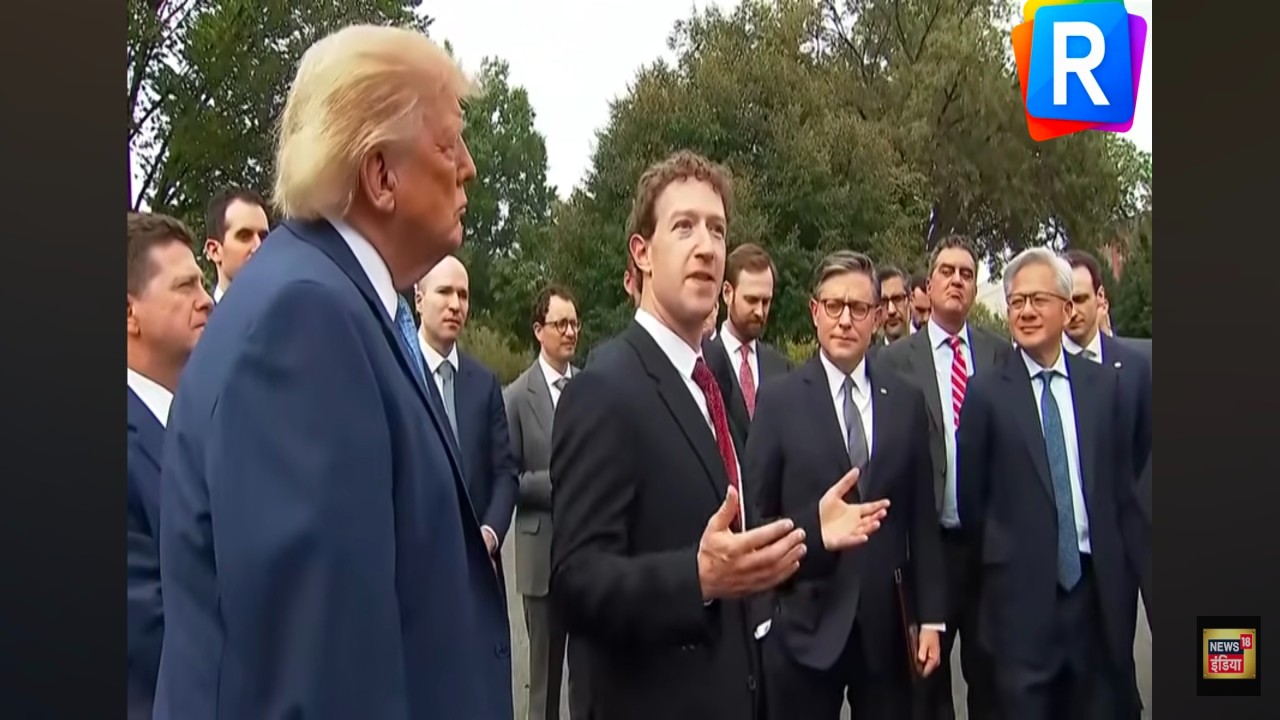
Washington, September 30, 2026: The United States has introduced a major change in how its federal government refers to advanced artificial intelligence technologies. President Donald Trump signed an executive order on September 29 directing executive departments and agencies, to the maximum extent permitted by law, to use the terms “Super Intelligence” (SI) and “SI” instead of “Artificial Intelligence” (AI) and “AI” in official communications and non-statutory documents.
The move reflects the administration’s view that the capabilities of modern frontier systems have expanded significantly beyond the capabilities originally associated with artificial intelligence.
White House Formally Introduces the New Terminology
The executive order states that the federal government should use “Super Intelligence” and “SI” in official correspondence, public communications, websites, reports and policy documents.
Importantly, the order does not require previously issued regulations, presidential actions, contracts, grants or historical documents to be rewritten.
For the purposes of the order, “Super Intelligence” currently uses the existing federal statutory definition of artificial intelligence unless a future presidential action or Act of Congress changes that definition.
The order also directs the Assistant to the President for Science and Technology to submit proposed legislative language within 60 days. The proposal is expected to examine whether a new federal definition of “Super Intelligence” should modify or replace existing statutory references to AI.
A Shift in the Government’s Technology Vocabulary
The White House describes the terminology change as recognition of rapidly advancing capabilities in modern AI systems.
According to the executive order, frontier technologies increasingly amplify human creativity and capabilities across areas including science and medicine. The administration therefore argues that “Super Intelligence” better reflects the capabilities and potential of these technologies.
The change is primarily a government terminology and policy framework change. It does not mean that every existing AI system has suddenly become a superintelligent system in the technical sense.
Technology Leaders Discuss AI Safety
The terminology shift comes as the White House is also engaging major technology companies over the development and safety of advanced AI systems.
A September 29 meeting involving major technology executives produced a voluntary agreement focused on AI safety standards, including independent auditing and measures intended to prevent AI systems from causing unintended security problems. Reuters reported that executives from companies including Meta, Google and Nvidia participated in the discussions.
The administration has also promoted continued investment in AI infrastructure, including data centers and advanced computing facilities.
Safety and Oversight Remain Key Issues
As AI systems become more capable, questions about safety, security, accountability and human oversight have become increasingly important.
The latest White House initiative places the development of advanced intelligence alongside efforts to establish safeguards. The September 29 agreement described by Reuters includes multiple layers of oversight, while the administration has also emphasized the strategic importance of advanced AI technologies.
The White House’s earlier national-security policy also called for advanced AI systems used by the U.S. government to remain robust, controllable and subject to clear lines of accountability.
Economic Impact and New Infrastructure
The expansion of advanced AI is also driving investment in computing infrastructure, semiconductor manufacturing and data centers.
Supporters of the technology have argued that these investments could generate new economic opportunities and jobs, while critics and researchers continue to raise questions about energy consumption, employment disruption and the broader social effects of increasingly capable AI systems.
The extent of these future economic effects remains uncertain and will depend on technological development, investment, regulation and adoption.
Healthcare and Other Potential Applications
Advanced AI systems are being developed for applications across sectors including healthcare, scientific research, education and business.
The broader vision presented by technology leaders is that increasingly capable systems could improve productivity and contribute to advances in areas such as medicine and scientific discovery.
At the same time, the development of more powerful systems raises questions about reliability, misuse, privacy and the appropriate level of human supervision.
What Happens Next?
The next major step will be the proposed legislative language requested by the September 29 executive order.
Within 60 days, the administration’s science and technology office is expected to submit proposals addressing how the federal government should legally define “Super Intelligence” and whether existing statutory references to artificial intelligence should be amended.
The development marks a significant change in U.S. government terminology, while the underlying debate over advanced AI continues to involve technology companies, policymakers, researchers and the public.
For now, the United States is moving toward a new federal vocabulary for advanced intelligence technologies—but the technical, legal and social meaning of “Super Intelligence” will continue to develop as policymakers and researchers work to define the next generation of these systems.
